
Why Supply Chain Traceability Has Become a Business Requirement
Supply chains have entered a new era, one defined as much by proof as by performance. Customers want to know where products come from and whether claims around quality, sustainability, and ethics are real. Regulators are raising expectations on reporting, auditability, and recall readiness. Meanwhile, manufacturers, logistics providers, and retailers are navigating disruption as a constant: changing trade conditions, supplier instability, inflationary pressure, and increased risk of fraud and counterfeiting.
In this environment, traditional “visibility” is no longer enough. Knowing where a shipment is today does not answer the questions that matter most when something goes wrong or when trust must be earned. Companies increasingly need the ability to reconstruct the complete history of a product, including where it originated, how it was handled, what it was exposed to, and which partners took custody along the way.
That capability is traceability.
Traceability creates a verifiable record of product movement and transformation across the supply chain—from raw materials to finished goods and downstream distribution. When implemented effectively, it becomes more than an operational tool: it strengthens recall response, reduces disputes, improves quality control, supports compliance, and enables credible sustainability reporting. As organizations work across complex networks of suppliers and service providers, it also raises an important question - how can traceability data be shared and trusted across multiple parties?
This is where blockchain is increasingly relevant—not as a replacement for supply chain systems, but as a modern trust layer that can help make traceability records tamper-evident and auditable across an entire ecosystem.
In this article, we explore the value of traceability, the business outcomes it enables, and the role blockchain can play in building trusted, interoperable supply chains.
Why Supply Chain Traceability Has Become a Business Requirement
Supply chain traceability is quickly moving from “nice to have” to essential infrastructure. Across industries, pressure is coming from every direction: stricter regulations, higher customer expectations, more frequent disruptions, and increasing exposure to fraud and counterfeit goods. In response, companies are investing in digital supply chain traceability systems that can prove what happened to a product, not just estimate it.
At its core, traceability is the ability to reconstruct the complete history of an item or batch: where it originated, which facilities handled it, how it was transformed, which partners took custody, and which customers ultimately received it. This goes beyond basic logistics tracking. It enables organizations to answer detailed questions like: which raw material lot went into a finished product batch, which equipment line processed it, and what environmental or handling conditions it experienced across transport and storage.
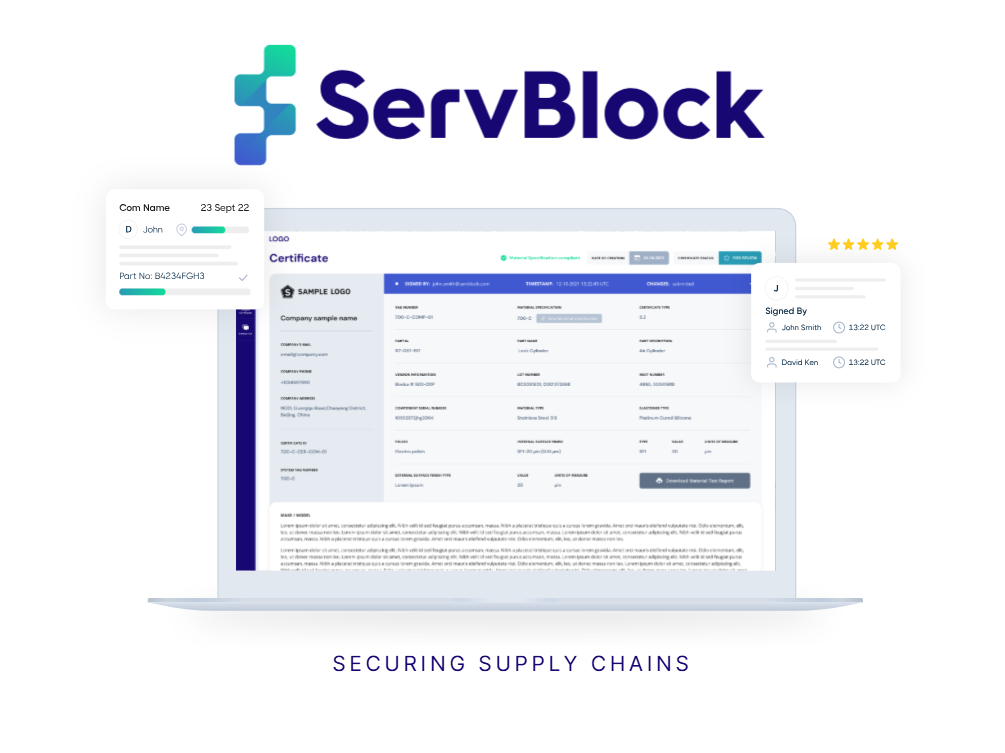
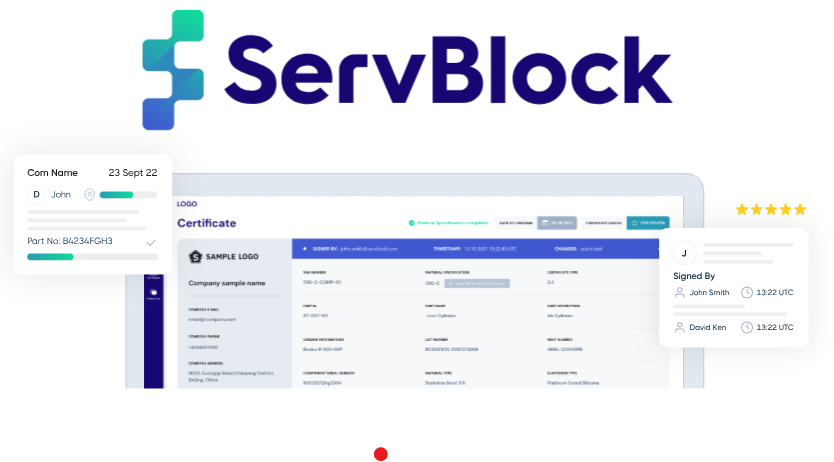
For high-value or regulated goods—especially in pharmaceuticals and biotechnology—this level of detail is no longer optional. Traceability directly affects product integrity, regulatory readiness, and patient safety. That is why modern platforms such as Servblock (servblock.com) focus specifically on verified, auditable traceability and compliance workflows tailored to complex life-sciences supply chains
Key Benefits of Traceability in Supply Chain Management
Traceability is often framed as transparency, but the true business value is operational. When traceability is implemented as an event-based, digital record across the supply chain, it delivers measurable gains in risk management, quality, compliance, and cost reduction.
Faster, more precise recalls and incident response
One of the strongest use cases for traceability is recall readiness. When a quality issue or contamination event occurs, organizations must be able to trace impacted lots quickly and act with precision. Without strong traceability, recalls expand unnecessarily because companies cannot confidently isolate what’s affected. This leads to greater waste, higher costs, and avoidable reputational damage.
With end-to-end traceability, businesses can trace both forward and backward—identifying which ingredients contributed to a batch and where that batch moved downstream. This reduces recall scope and significantly improves response speed.
A well-known real-world reference point is Walmart’s focus on food traceability initiatives, including blockchain-supported traceability efforts using IBM Food Trust to improve trace-back and accountability within produce supply chains. While the specific technology choices matter less than the overall approach, the direction is clear: the ability to trace product history quickly is becoming a baseline expectation in modern supply networks.
Improved quality control through root-cause analysis
Traceability is also a continuous improvement tool. When finished goods can be connected to upstream inputs and production events, quality teams gain a much stronger ability to detect patterns and identify root causes. Instead of treating issues as isolated defects, traceability allows teams to link deviations to specific variables such as supplier lot, process step, equipment settings, or time windows.
In manufacturing environments, this reduces scrap, rework, and batch failures. In regulated industries, it strengthens deviation handling and corrective action processes. Over time, traceability transforms quality management from a reactive task into a data-driven capability that improves predictability and reduces operational risk.
In pharmaceutical supply chains, this is particularly important because quality data must remain consistent and defensible across multiple parties—raw material providers, CMOs, logistics vendors, and manufacturers. Servblock’s traceability positioning aligns with this need by emphasizing trusted data exchange and improved compliance workflows across partners.
Protection against counterfeit goods and diverted inventory
Counterfeiting and diversion represent one of the most expensive and dangerous threats to supply chains. In healthcare and life sciences, counterfeit or improperly handled materials can create direct patient safety risks. In consumer and industrial categories, counterfeits lead to warranty disputes, safety incidents, and loss of trust.
Modern supply chain traceability helps reduce counterfeit risk through product identity mechanisms such as batch verification and serialization, combined with event trails that record custody changes. Strong traceability makes it easier to detect anomalies like missing handoff events, duplicated identifiers, or products appearing in unauthorized markets.
A real-world example of provenance protection can be seen in high-value commodities. De Beers has expanded the Tracr platform to support diamond provenance tracking, demonstrating how traceability and blockchain-informed approaches can support trust in goods with high fraud exposure.
Blockchain in Supply Chain Traceability: What It Actually Does
Blockchain is often described as a solution for supply chain traceability, but in practice its role is more specific. Traceability is a business system: identifiers, event capture, partner data exchange, and compliance workflows. Blockchain is best understood as a trust mechanism within that broader system.
Blockchain’s core contribution is that it creates a tamper-evident record. Once an event is written to a ledger, it becomes extremely difficult to alter without detection. This matters because supply chains involve multiple independent organizations, each with different systems and incentives. In those environments, a shared record that improves data integrity can reduce disputes, accelerate audits, and increase confidence in provenance claims.
This is especially relevant in pharmaceutical supply chains where different parties must exchange data but cannot rely on informal documentation or manual verification. Servblock explicitly focuses on this trusted multi-party exchange, using blockchain principles to support verifiable traceability.
Real-World Blockchain Traceability Examples (and What They Teach)
Across industries, blockchain traceability initiatives have demonstrated where distributed ledgers can strengthen supply chain operations.
In healthcare, blockchain has been evaluated in the context of pharmaceutical traceability and compliance modernization. For example, Servblock has been referenced in life sciences supply chain contexts relating to auditing, compliance, and trusted information exchange.
In global trade, distributed ledger systems have been proposed to reduce reconciliation overhead and document delays across complex networks. A widely known example is Maersk and IBM’s TradeLens initiative, which focused on sharing trade-related events and documentation among multiple stakeholders. The platform’s history illustrates an important lesson: technology can improve integrity and collaboration, but adoption requires network-level alignment and strong governance.
These examples point to the same conclusion: blockchain is most valuable when the supply chain problem is not simply data storage, but multi-party trust and interoperability.
Why “Traceability + Blockchain” Requires a Practical Architecture
A common misconception is that blockchain should store all supply chain data. In reality, end-to-end supply chains generate massive volumes of information—certificates, sensor readings, batch records, logistics events—and not all of it belongs on-chain.
The most effective approach is typically hybrid:
- detailed operational data stored in scalable databases (off-chain)
- critical events, attestations, and integrity proofs stored as blockchain records (on-chain)
This architecture supports scalability, commercial confidentiality, and compliance while preserving auditability and integrity where it matters most. It also aligns with how Servblock describes its platform—creating a form of digital record and verification layer for pharmaceutical raw material traceability.
Building a Modern Traceability Strategy
Organizations that successfully implement traceability share common traits. They start with clear business outcomes: faster trace time, reduced recall scope, improved supplier accountability, or stronger compliance performance. They standardize identifiers across products and locations, capture critical events at control points, and enable secure data sharing across partners.
In regulated environments, especially biotech and pharma, traceability must be designed from the start with auditability and verification in mind. That is the role of modern compliance-ready traceability platforms like Servblock: to move traceability beyond paper workflows and disconnected systems into a verifiable, collaborative digital supply chain model.
The Future of Supply Chains is Verifiable
Supply chains are moving into a new standard—one where it is no longer enough to say a product is safe, authentic, ethically sourced, or sustainably produced. Increasingly, organizations must be able to prove it.
That is the real value of traceability. It transforms supply chain operations from fragmented reporting and reactive problem-solving into a consistent, auditable system of record—connecting materials, processes, and partners through a reliable history of events. The result is not just improved compliance. It is stronger quality control, faster recall response, better risk management, reduced disputes, and more credible sustainability outcomes.
Blockchain has an important role to play in this evolution, particularly as traceability becomes more networked. In multi-party ecosystems where trust is limited—and where provenance, chain-of-custody, and data integrity matter—blockchain can act as a powerful trust layer, enabling tamper-evident verification while supporting shared governance across supply chain stakeholders.
Ultimately, modern supply chains will be defined by two traits:
- Interoperability — the ability to share traceability data across partners and systems
- Verifiability — the ability to rely on that data as proof, not just information
Traceability is how organizations get there.
If your organization is looking to improve traceability across suppliers, logistics partners, and downstream channels or exploring how blockchain can strengthen provenance and compliance across the network—Servblock can help.
Servblock works with businesses to design and implement traceability frameworks that are practical, scalable, and aligned to real operational outcomes—whether your priority is recall readiness, anti-counterfeit protection, ESG reporting, or end-to-end supply chain accountability.
Get in touch with Servblock to explore how trusted traceability can become a competitive advantage for your supply chain.